
Every year, chemistry students walk into the room with the same unspoken question:
Why do I have to take this class?
Not in a defiant way — in a practical way.
They’ve heard chemistry is hard.
They’ve heard it’s math heavy.
They’ve heard it’s memorization.
So before formulas, before safety contracts, before lab equipment … the course needs a purpose.
This introduction to chemistry lesson helps students understand how it’s pervasive it is in our lives and the impact it has before formal and specific content lessons begin. It’s about allowing students to explore where chemistry already exists — and organizing those observations into something that feels like a discipline instead of a collection of topics.
Starting With Phenomena Instead of Definitions
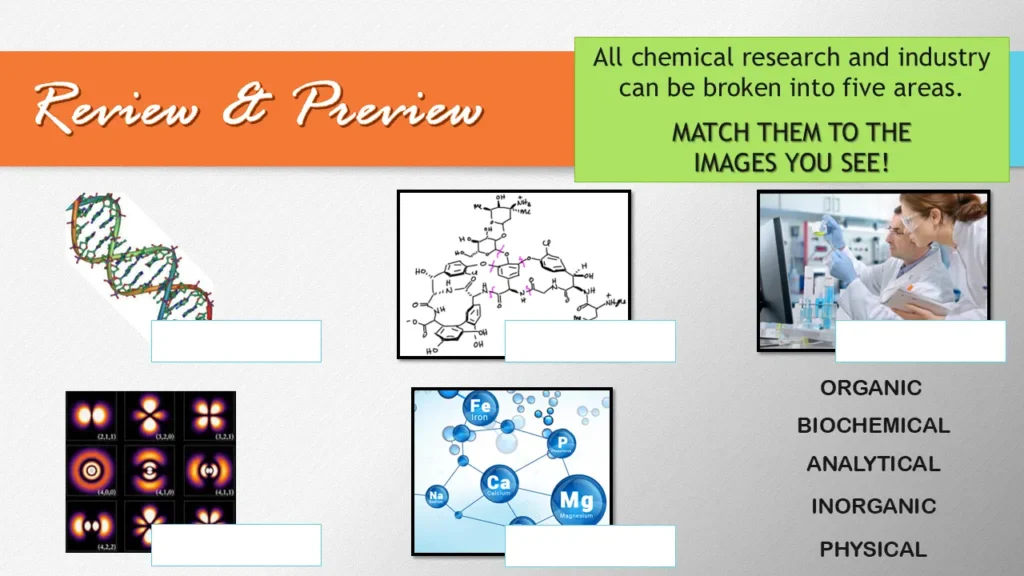
Instead of including specific vocabulary in an introduction to chemistry lesson, students can begin by sorting real examples of chemical work and research into categories.
They encounter images and situations connected to different fields — medicine, materials, environmental issues, and biological processes — and are asked to make sense of what each represents.
Their job is not to be correct yet.
Their job is to look for evidence and make inferences.
Students gradually realize that chemistry isn’t one thing; it’s multiple ways of studying matter. They begin grouping ideas into major branches such as studying living systems, analyzing substances, designing materials, and explaining physical behavior of matter.
By the time formal terms appear, they label ideas students already built.
That shift matters.
The vocabulary becomes organization — not memorization.
Connecting Chemistry to Human Experience
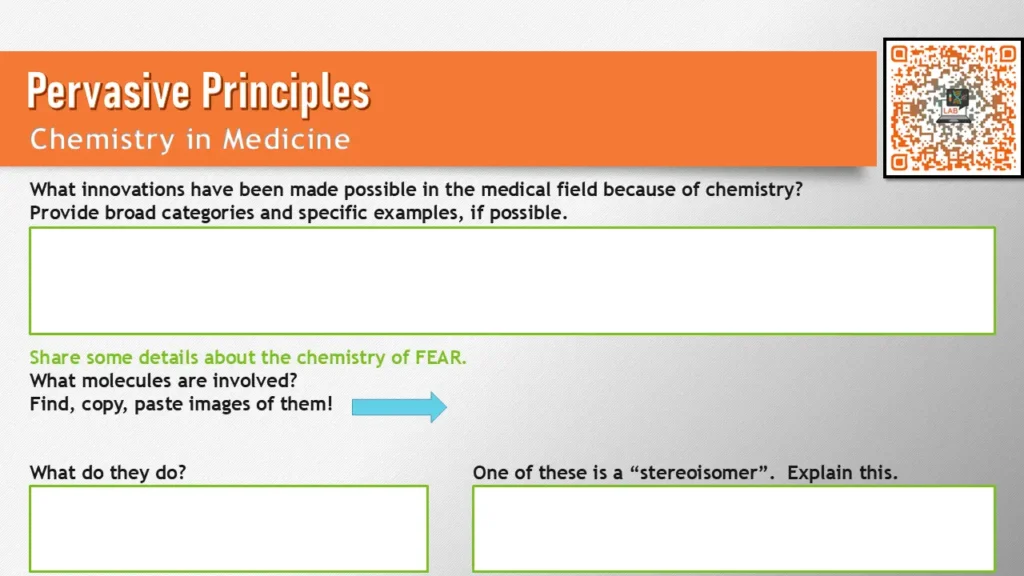
Students then work in small groups to investigate – using a virtual textbook available online – how chemistry shapes major parts of everyday life.
Each group explores a different area — medical advances, agriculture, environmental challenges, or material design — and builds a short summary to share with the class.
They don’t just list facts.
They answer questions like:
- What problem existed?
- What chemical understanding made a solution possible?
- How did that solution change people’s lives?
For example, students may examine hormones involved in fear responses, pigments responsible for flower color, the structure of composite materials, or chemical strategies used in environmental cleanup.
Instead of being told chemistry matters, they gather evidence that it does.
By the end of this introduction to chemistry lesson, the class collectively constructs a picture of chemistry as a tool humans use to understand and improve the world.
What Students Learn in This Introduction to Chemistry Lesson
On paper, the goals are simple: identify areas of chemistry and explain its impact on society.
But the deeper outcomes are more important.
Students practice:
- building explanations from evidence
- organizing observations into systems
- recognizing patterns across different contexts
- revising their thinking after discussion
This mirrors the expectations of modern science classrooms — students making sense of ideas rather than receiving them fully formed.
They leave the first days of the course understanding what kind of thinking chemistry requires before encountering any calculations or equations.
In my classroom, it also sets the stage for a lesson structure that is consistent and intentional — students encounter an idea, organize observations, and only then attach terminology and refine their understanding.
This same planning approach shapes every future investigation in the course. I’ve even applied the same framework and template to prepare lessons for a high school biology course!
How This Introduction To Chemistry Lesson Fits NGSS Chemistry
Though this lesson doesn’t directly connect to a single Disciplinary Core Idea in NGSS chemistry, it does require students to engage in the work the standards expect scientists to do.
Students participate in the Science and Engineering Practice of Obtaining, Evaluating, and Communicating Information. They gather information from multiple real-world contexts, determine what is relevant, and communicate explanations to others. The goal isn’t recalling facts about chemistry — it’s deciding how chemical knowledge helps explain medical advances, environmental responses, agricultural processes, and material design.
At the same time, this first day of chemistry class activity quietly reinforces the Crosscutting Concept of Systems and System Models. Rather than treating chemistry as isolated topics, students organize examples into branches of the discipline and begin recognizing chemistry as a structured system of related ideas. They see that observable outcomes in the world connect to processes happening at smaller scales, and that those connections repeat across different contexts.
This is often how NGSS-style chemistry learning begins: not with formulas, but with students learning how to gather meaning from information and organize it into a coherent structure they can build on throughout the year.
Why This Works as a First Day Of Chemistry Class Activity
Traditional introductions often begin with measurement rules, safety procedures, or atomic structure.
Those matter — but they don’t yet answer the question students are really asking: what kind of class is this going to be?
This format, delivered on DAY ONE, demonstrates both how the class will work and provides a thorough, grounding introduction to chemistry lesson.
Instead of copying answers, students start figuring things out together. They talk through ideas, connect observations, and use evidence to support what they think. This lesson gives them their first experience with that environment — not as a one-time activity, but as the expectation they’ll keep encountering.
Across the next several lessons, three big ideas keep reappearing:
- Chemistry is about explaining real situations.
- Ideas connect and build on each other.
- Students are expected to reason through evidence, not just record information.
The opening day simply makes those expectations visible.
Consistency is what makes them believable.
By the time formal content is introduced, students already understand how they’re meant to participate — and why their thinking matters.
How This Introduction To Chemistry Fits Into a Larger Course Story
This opening experience sets the pattern for the rest of the year: students encounter a situation, look for patterns, and develop explanations before formal instruction refines them.
Instead of front-loading theory and hoping applications feel relevant later, relevance appears first and theory organizes it.
The result is a class that feels coherent from the beginning — students know what they are trying to understand and why each unit exists.
This first experience isn’t meant to stand alone — it establishes the pattern students follow all year. Each unit builds on the expectation that they will notice patterns first and formalize ideas second.
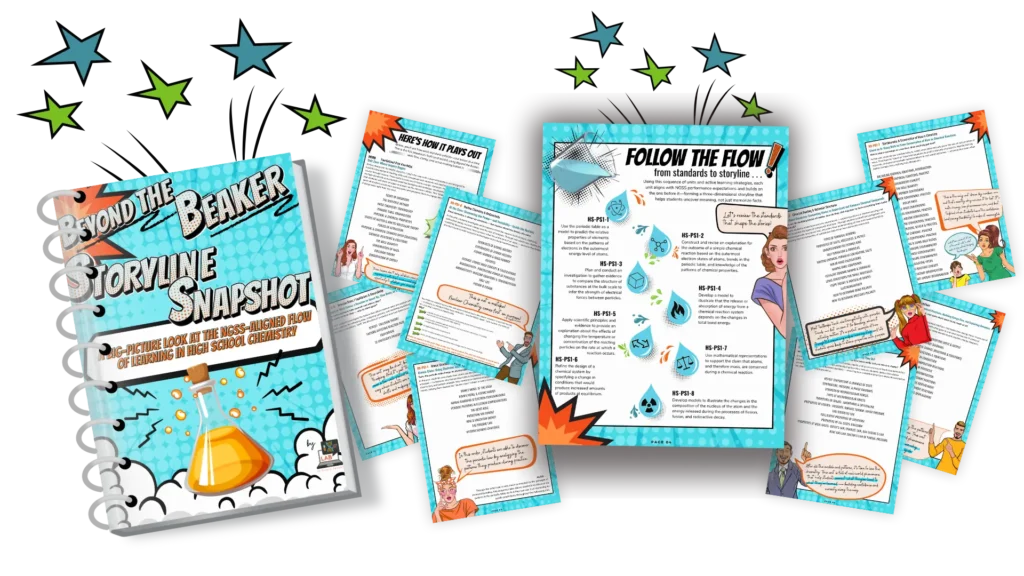
I map that full progression out in my year-long Storyline Snapshot for chemistry.